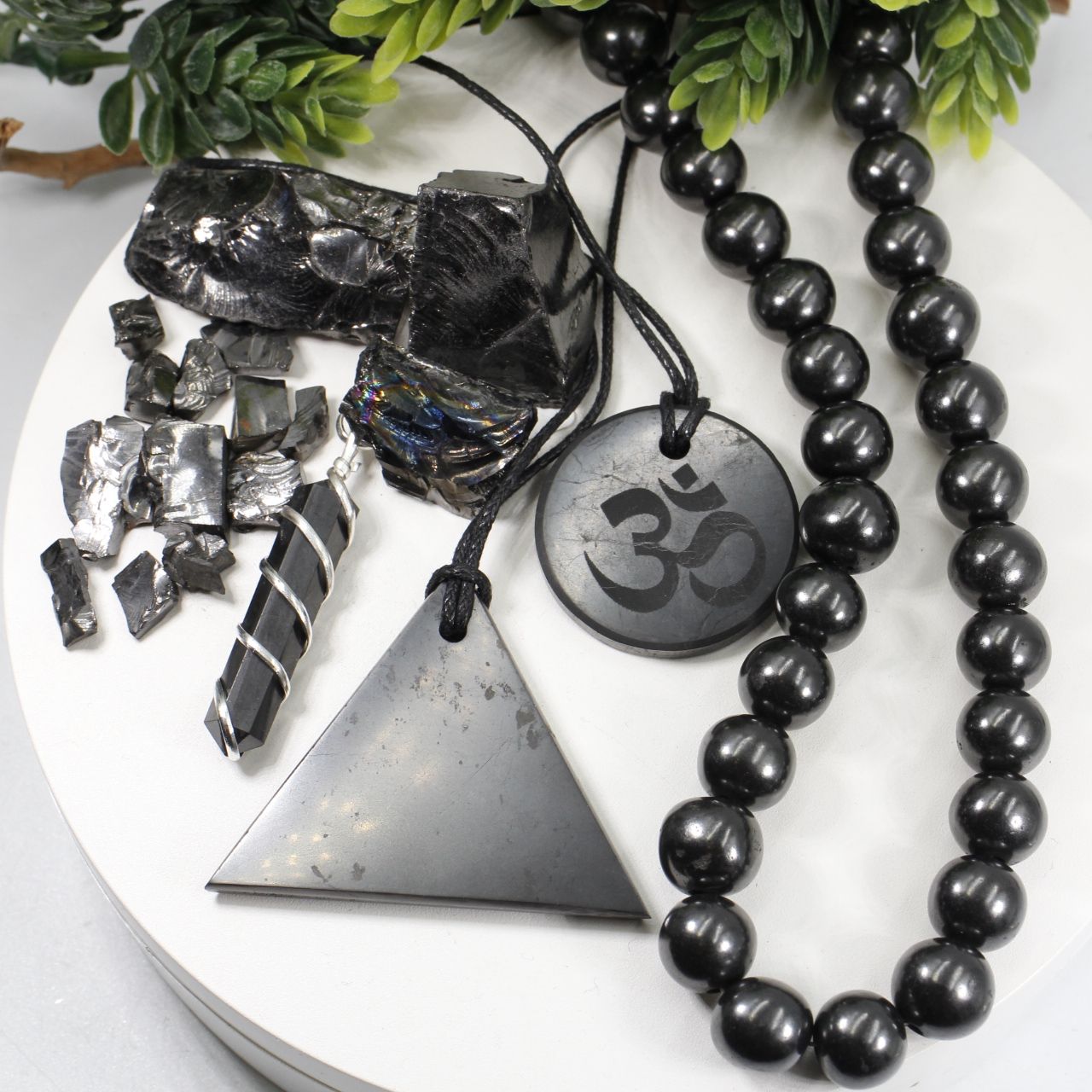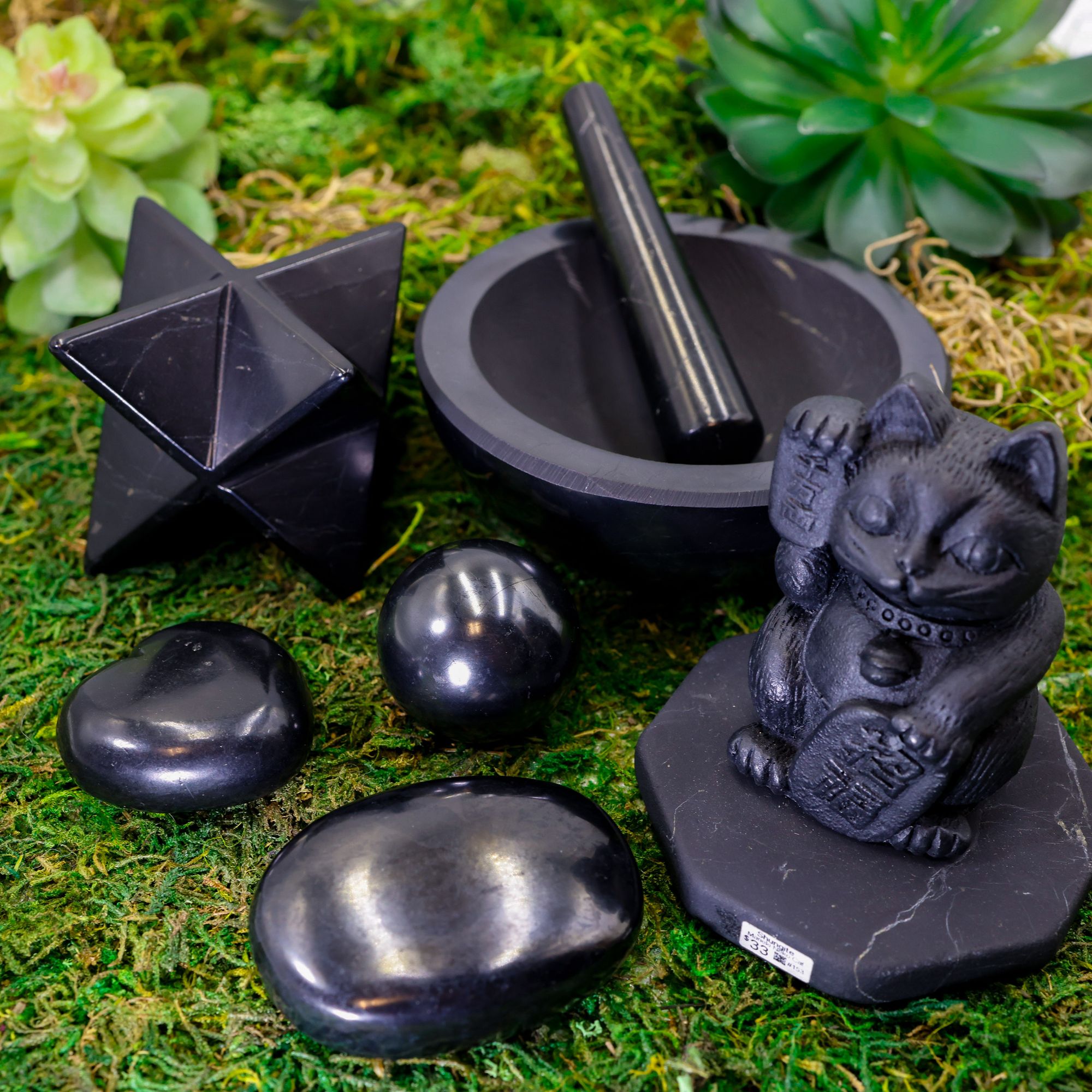
Shungite, a black Russian stone that started out as single-celled algae 1 to 2 billion years ago, has only recently become widely known and used for its unique physical and metaphysical properties. Found primarily near the Shun'ga Village in the Karelia region of Russia, residents often attributed the black stone with restorative and healing properties. Springs that flowed through the black stone were often applied as a cure all by villagers due to how fresh, clean and pure the waters tasted and their belief that the water healed ailments and physical wounds. Local lore says that in the 16th Century a noblewoman named Xenia Ivanovna was exiled to a monastery in the region. She suffered from a chronic illness with no known cure. She was given water from a spring that flowed out of a Shungite layer and in time found her health had returned. She later married and gave birth to Mikhail Roman, the first Tsar of the Romanov Dynasty. Then, in the 18th Century, after spending much time in the region, Tsar Peter the Great claimed to feel so well and energized after bathing in and drinking the natural springs that he established Russia's first health resort, the "Marcial Waters", in 1719. Despite this royal endorsement, it was not until 1792 that Nikolay Ozereckovskiy, a naturalist and encyclopedist, recorded the first physical description of the stone. Another century passed and the magical rock was finally named and classified in 1879 by Aleksandr Inostrantsev, a Russian geology professor at St. Petersburg University.
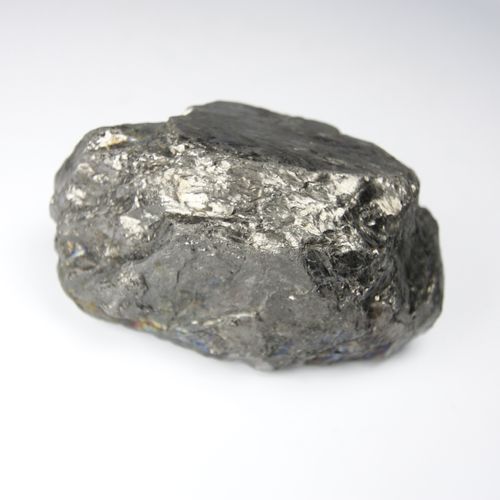
Subsequent classification studies based on petrogenesis (how the rock formed) and composition (carbon content) have resulted in two major types of Shungite according to Mindat.org. In the metaphysical community, these two types are known as Elite (aka Noble) Shungite and Common Shungite (or simply, Shungite). Elite Shungite is comprised of 98% carbon or higher and formed from the remobilization of bitumen (aka tar) into fractures and pore spaces as the Precambrian oil source rocks were squeezed and heated during metamorphism. Due to the release of gaseous and fluid components by the bitumen during this process, the tar-like material hardened with a submetallic luster.
On the other hand, Common Shungite, contains less than 98% carbon and formed as oil-bearing shales became metamorphosed under high pressures and temperatures in the Earth. This large-scale formation resulted in a stratified, chalky material that easily “rubs off” when handled. Noble Shungite is far rarer due to the high concentration of carbon required for its formation, and the much smaller volume restricted to specific veins rather than massive deposits (as is the case for Common Shungite).